
Annual Vaccine Review
Potentially fatal viruses can be prevented by the vaccinations we offer in our Annual Health Examination.
The most basic component of preventative health care.
We are strong advocates of vaccination, as we see animals suffer and die all too often from preventable diseases.
For more info about preventing diseases, see our Annual Health Examination.
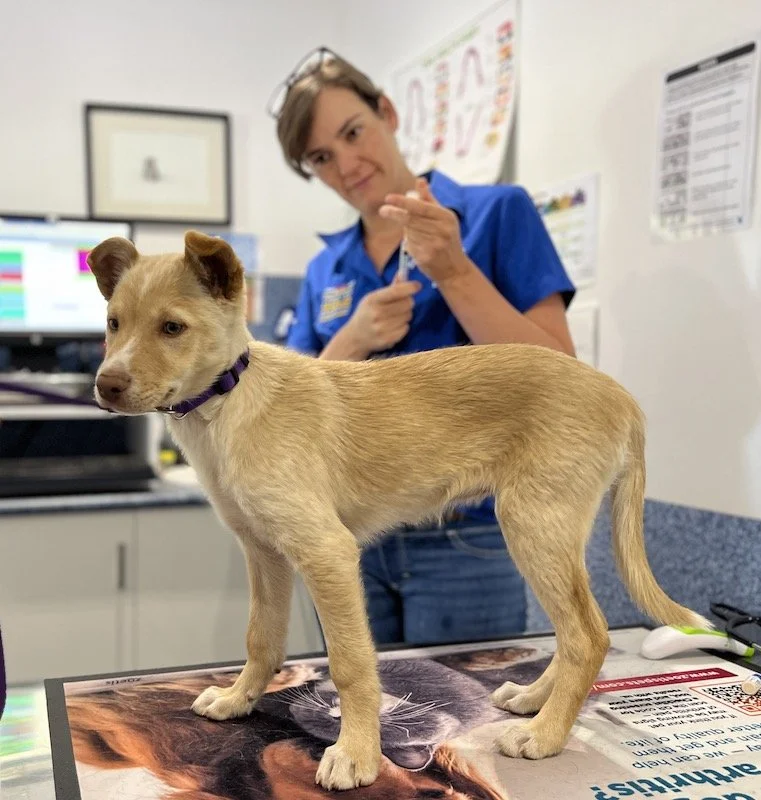
Dogs
Dogs are routinely vaccinated against the following diseases at our clinic:
C3 - Parvovirus, Distemper Virus and Hepatitis Virus vaccine
C5 - The above, PLUS Bordetella Bronchiseptica and Canine Parainfluenza Virus (Canine Cough) vaccine
C7 - The above, PLUS the C2i component covers Canine Coronavirus and Leptospira Copenhageni
We recommend the C5 or C7 vaccination for ALL of our canine patients.
Common questions about dog vaccines & diseases
-
Parvovirus is a life-threatening viral disease which only infects dogs and is particularly dangerous to puppies. It attacks rapidly growing cells in the body, and so it attacks the gut lining, bone marrow (including the cells of the immune system) and the spleen.
-
Pups affected by the parvovirus ‘shrink’ (overwhelming dehydration), very quickly succumb to a severe gastroenteritis that will kill 95% of pups that are not treated with aggressive therapy. Parvovirus may be fatal in as little as 24 hours. Our article on parvovirus details this disease well, please have a read.
-
Parvovirus infection is something we consistently see in Dubbo, with severe outbreaks common as well. The virus can remain in the soil and environment for more than 5 years after contamination by an infected dog. Public parks and places where dogs congregate are common sources of this infection for dogs.
-
Hepatitis virus – a contagious form of liver disease, which is difficult to diagnose, and is probably seen more commonly than we realise, as a form of hepatitis (liver inflammation).
Distemper virus – a disease that affects the respiratory, nervous system and gastrointestinal system in dogs. It is less common in dogs now, but there are still cases being identified in foxes. It is the hope of the veterinary community that we will one day be able to eradicate distemper virus.
Canine cough (Kennel Cough) – a contagious cough that is not life threatening (other than to the very young, very old, and very sick) but is completely infuriating for the owners and the dogs that are unlucky enough to get it. Canine cough is caused either by the bacterium Bordetella bronchiseptica, or the canine parainfluenza virus, both of which are covered in the C5 vaccination.
Canine Coronavirus - A common cause of gastrointestinal illness in dogs.
Leptospirosis - A bacterial disease transmitted through contact with contaminated water or urine from infected animals, potentially leading to kidney and liver failure.
-
C5 vaccinations are a requirement for any dog undergoing training, staying in boarding kennels, or participating in dog shows.
Again, we recommend a C5 vaccination for ALL our canine patients, because this also includes the Canine Cough vaccine. This disease is airborne (like the flu!) so it is impossible to stop its spread. You may think your dog does not come into contact with any other animals, but it can be spread by other dogs barking through fences, a coughing or barking dog in our waiting room or when your pet is in hospital. We take all measures we can to prevent these things from happening within our doors (such as isolation of unvaccinated animals, disinfection of people and equipment between patients etc), but the most effective way to ensure it does not happen to you and your pet is through vaccination.
The C7 also includes the added protection against Leptospirosis and Canine Coronavirus.
Our recommended vaccination timeline
Please note that your puppies are not fully vaccinated until they've received 3 vaccinations.
Your pet is not fully protected until 10 days after the final vaccination.
6-8 weeks – C3
10-12 weeks – C7
14-16 weeks – C3 + C2i
Annually – C5 or C7
Tips for buying a new puppy
Be immediately aware of your pup's vaccine status before you leave the breeder.
Book an appointment with your vet ASAP to visit when vaccine boosters are due
If moving into a house, ensure the yard is free of Parvovirus infection. Note: parvovirus can live in the soil for many years (>5 years in cool shaded areas), and will emerge after rain and is actively spread by flies. If uncertain, wait until 10 days after the 14-16 week booster injection to introduce the pup into this yard.
Never let your pup out of the yard until 10 days after the 14-16 week booster injection, unless veterinary advice says otherwise (you may attend puppy preschool if conducted at a veterinary clinic).
Maintain your pets vaccine cover for life by annual health examination and vaccination.
Cats
Cats are routinely vaccinated against respiratory diseases (‘cat flu’) and a contagious cause of enteritis (diarrhoea) seen in cats.
Tricat F3 - Feline Enteritis (Panleucopaenia), Feline Calicivirus and Feline Herpesvirus type 1.
We recommend the F3 vaccine for all cats.
Common questions about Cat vaccination
-
While the diseases protected against here are not usually life threatening, they are often recurrent diseases. For example, herpesvirus can cause sneezing and nasal discharge, weepy eyes, ulcers on the eyes and general lethargy. Only the very young, very old and the compromised are at risk of fatal disease. The remainder have flu like symptoms for a number of days to weeks. The nature of herpesvirus is similar to that in humans – it is always present in the body and flares up intermittently, usually in times of stress, and is very contagious to other cats. The vaccination can help reduce flare ups in already infected cats, and prevents infection in naïve cats.
-
Yes. Our additional vaccines can be used in high risk cases including Feline Leukaemia Virus (FeLV) and Feline Aids (FIV). FeLV & FIV are spread by fighting animals, so are only recommended in these animals. These are separate vaccinations to the F3, and must be requested before your visit for vaccination.
-
We do not routinely vaccinate against FeLV & FIV due to the increased number of vaccine reactions (lethargy and depression for up to 48 hours). In cats that are not at risk, this vaccine is not important, but these side effects of the vaccine are acceptable in cats that are at high risk of these diseases. If you are unsure whether your cat is at risk of FeLV and FIV, please contact our clinic, or discuss this with a vet at your next annual health examination and vaccine review.
Vaccination timeline in cats
Your cat will require a vaccination every 12 months using these vaccines.
If your pet requires FeLV or FIV vaccination, this can fit into the above schedule.
If you have any questions regarding your cats vaccination status please phone us on 02 6884 9900.
Kittens 6-8 weeks - F3
Booster 10-12 weeks - F3
Then annually – F3
Other Pets
We also have vaccinations for rabbits and ferrets. Rabbits are vaccinated against the fatal calicivirus, and ferrets are vaccinated against the fatal distemper virus. Both of these diseases are ultimately fatal, and animals diagnosed with these diseases are generally euthanased or die.
The vaccination schedule is similar to that of dogs and cats with multiple vaccinations in young animals, followed by annual boosters. Please contact the clinic if you have a rabbit or ferret that needs vaccination.
Other Parasites
With your vaccine review, we will also review parasite control, including gastrointestinal parasites, heartworm, fleas, ticks and other external parasites.
Please discuss control of these while in your annual health examination consultation, or alternatively visit our Parasites in dogs and cats article for more information.
If you have any questions or would like to book in for a consultation please do not hesitate to phone us 02 6884 9900
Please visit our Annual Vaccination Review page for important information about adding on vaccines to the Annual Health Examination.